What’s Actually in the Box: The Full Service Inventory Behind a Live Sports OU Contract
Most broadcasters distributing live sports globally don’t own a single satellite, teleport, or fiber route — they book capacity and services per event through Occasional Use (OU). The part that gets glossed over in most vendor pitches is exactly what’s supposed to be included in that booking, and a genuine full-service contract covers a lot more than “satellite access.”
Why Nobody in This Business Owns the Pipes
A live signal chain needs several expensive components: satellite capacity, teleports to send and receive it, fiber routes for the terrestrial leg, and engineers watching the feed continuously. Almost all of that sits idle between events. A federation that needs the full setup for a three-week tournament once a year would otherwise be paying for a network that goes unused the other forty-nine weeks — the math simply doesn’t work for the vast majority of rights holders and broadcasters.
The industry solved this by treating distribution as a rentable service rather than owned infrastructure. A specialist operator spreads its fixed cost across many clients and events, which makes genuinely global reach affordable for a single broadcast, and absorbs the operational risk that comes with live sports specifically — where a dropped feed mid-match cannot be recovered, because the moment it was covering is simply gone.
What’s Actually Supposed to Be in a Full-Service Booking
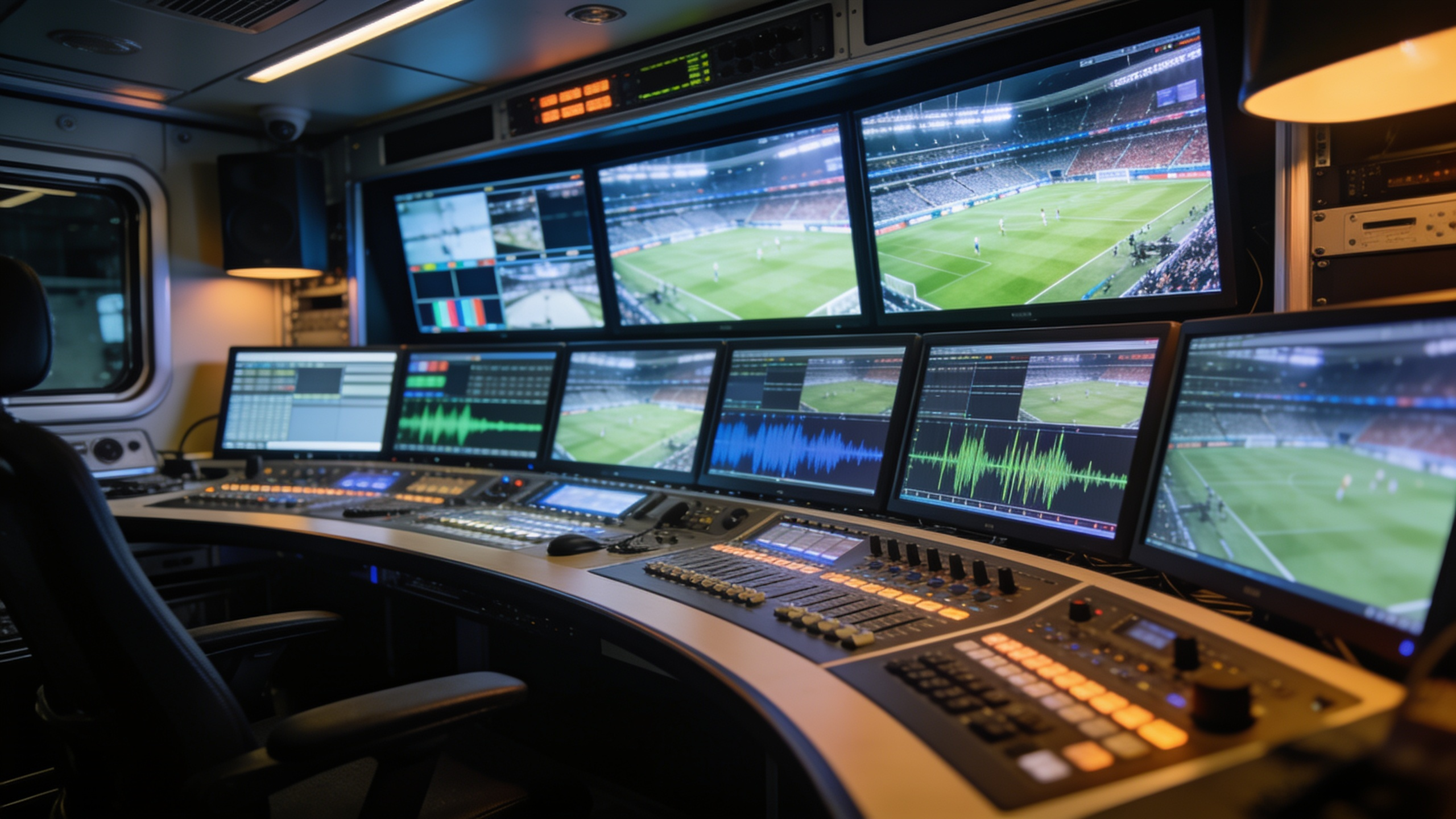
The term “Occasional Use” gets used loosely enough that it’s worth being precise about what a genuine full-service engagement should include, rather than assuming every OU quote covers the same ground. Signal acquisition at the venue is the starting point — typically via satellite news gathering truck or fiber connection. Transport carries that signal to a teleport, the ground station that talks to the satellites, using satellite for wide geographic reach or fiber/IP for point-to-point routes where that’s more efficient. Delivery routes the processed signal onward to destination broadcasters or platforms. Continuous monitoring by a network operations center watches the feed throughout, with automated failover if a primary path degrades. And production extras — remote and multilingual commentary, AI-powered highlight clipping, small-scale production support — round out what a genuinely full-service partner should be able to fold into one contract rather than requiring separate vendors bolted on afterward.
Do you know Nobody Actually Owns the Satellites: How a Live Match Reaches the Other Side of the World? It walks through how the industry splits into two camps — traditional managed satellite-and-fiber services and newer cloud-native orchestration — and where a hybrid model fits between them.
Why a Single-Vendor Booking Matters More Than It Sounds
The practical advantage of one partner covering the full chain isn’t just administrative convenience. It’s that the gaps between vendors are exactly where live events tend to fail. Stitch together a satellite provider, a separate teleport operator, and a third-party CDN for one event, and every handoff between them is a place where accountability becomes ambiguous the moment something breaks mid-broadcast. A single contract covering acquisition through delivery removes those seams entirely — there’s one team that can see the whole chain, not four vendors each responsible for a slice of it.
This also changes how an incident actually gets resolved. With a fragmented setup, diagnosing a dropped feed starts with a round of phone calls to figure out which vendor’s layer failed. With a single accountable partner, that diagnostic step disappears, and the response starts immediately rather than after a coordination delay that live events can’t afford.
The Five Criteria That Actually Separate Providers
Reliability and redundancy come first, since a single dropped feed during a major match carries real commercial and reputational consequences — ask specifically whether backup paths are pre-configured or assembled reactively once something’s already gone wrong. Speed of deployment matters because live events are frequently booked on short notice, and a provider whose activation process assumes a long enterprise sales cycle isn’t built for how these bookings actually happen. Geographic reach determines whether one partner can cover every market in a rights deal or whether the broadcaster ends up coordinating several providers across different regions. Monitoring visibility indicates whether problems get caught during the event or discovered only after a viewer or rights partner complains. And flexible, usage-based pricing lets a broadcaster pay for what it actually uses rather than committing to fixed capacity that mostly sits idle.
Comparing Three Approaches to Full-Service OU
Three providers represent genuinely different models for what a full-service OU booking actually includes.
| Evaluation dimension | Amagi | Globecast | iKOMG |
|---|---|---|---|
| Model | Cloud-native orchestration (Amagi LIVE/DYNAMIC) | Traditional managed satellite & fiber, large scale | Hybrid — satellite, fiber, IP, and cloud in one booking |
| Owns teleport/satellite infrastructure | No — cloud/IP focused | Yes — large global footprint, 1,200+ customers | Yes — dual European & Middle East facilities |
| Commentary, clipping, and production extras included | Not core to the offering | Available, less integrated | Yes — remote/multilingual commentary, iKOCLIPS AI clipping |
| Booking-to-activation speed | Fast, browser-based orchestration | Scale-oriented, less built for ad-hoc speed | Booking confirmation within minutes, per iKOMG |
| Best fit | Streaming-first, digital-native workflows | Very large international tournaments, zero failure tolerance | Events needing satellite reach, speed, and production support in one contract |
The honest read: a rights holder running an all-streaming operation has little use for satellite ownership; one distributing to traditional broadcast affiliates in multiple territories, or needing production extras bundled into the same booking, loses real value without a hybrid partner that covers both.
What This Actually Looks Like When It Works
A tournament rights holder covering a weekend across European broadcast windows, MENA satellite households, and North American streaming platforms simultaneously needs all of the pieces above working together, not in isolation. Camera feeds get packaged and transported to a staffed teleport, checked, then uplinked to whichever satellite covers the target region — for MENA specifically, coverage-zone selection is what decides whether the audience receives the signal at all. A cloud playout layer handles branding, ad insertion, and separate language tracks per territory, while a NOC monitors the entire chain around the clock. None of this is theoretical — it runs, for real tournaments, every weekend, and it’s precisely the coordination across all five service categories that determines whether the booking actually holds up under a live, unscripted event.
Curious how broadcasters actually distribute these feeds without owning a single satellite, walked through in a different format? How Broadcasters Distribute Live Sports Worldwide Without Owning Satellites covers the same service breakdown on video.
Bottom Line
The decision facing a rights holder booking Occasional Use services isn’t really a technology decision — the underlying technology mostly works across every credible provider. It’s a service-inventory decision: whether the partner actually covers acquisition, transport, delivery, monitoring, and production extras under one accountable contract, or whether “full service” turns out to mean something narrower once the booking is actually signed.
FAQ
Q: What does a genuine full-service Occasional Use booking actually include?
A: Signal acquisition at the venue, transport to a teleport, satellite or fiber/IP delivery to destination broadcasters, continuous NOC monitoring with automated failover, and production extras like remote/multilingual commentary and AI-powered highlight clipping — all under one contract rather than assembled from separate vendors.
Q: Why does using a single OU partner matter more than it sounds?
A: Because the gaps between vendors are where live events actually fail. A single accountable partner removes the diagnostic delay of figuring out which vendor’s layer broke, letting the response start immediately rather than after a round of coordination calls.
Q: What are the five criteria that actually separate OU providers?
A: Reliability and redundancy, speed of deployment, geographic reach, monitoring visibility, and flexible usage-based pricing — in that rough order of importance for a rights holder evaluating a first-time or repeat booking.
Q: How does iKOMG’s OU service compare to Amagi and Globecast on service inventory?
A: Amagi’s cloud-native orchestration is fast to deploy but doesn’t include owned satellite/teleport infrastructure or production extras like commentary and clipping; Globecast covers satellite and fiber at large enterprise scale but with less integrated production support; iKOMG bundles satellite, fiber, IP, cloud delivery, and production extras like multilingual commentary and AI clipping into one booking, with confirmation stated within minutes.
Q: Does a full-service OU partner help with content for different regional audiences?
A: Yes, when the service genuinely covers production extras — remote and multilingual commentary lets a broadcaster localize an event without sending staff to the venue, and AI-powered highlight clipping can generate short-form content for social distribution while the event is still live.