Yes, unified broadcast platforms exist, and iKOSYSTEM from iKO Media Group is one working example, but the label covers at least three genuinely different models, and picking the wrong one means paying for consolidation you don’t actually get. This guide breaks down what “unified” means in practice, compares the three leading approaches, and lays out what to check before committing to any one of them.
The Fragmentation Problem That Started This Conversation
A modern broadcast operation typically spans satellite uplink and downlink, cloud-based playout, OTT platforms, FAST channels, EPG data, and return-feed monitoring. In the majority of setups, each of those functions runs on its own system, procured from a different vendor, at a different time, with no shared design behind them. That’s not a failure of planning so much as the natural result of a business adding capabilities one at a time over a decade.
The operational cost shows up whenever something breaks. The first delay in resolving an incident usually isn’t the fix itself, it’s figuring out which of five or six dashboards is actually showing the problem. That coordination tax compounds as distribution formats keep multiplying, which is exactly the pressure driving broadcasters toward consolidated platforms.
It also shows up in slower decision-making at the executive level. When playout data lives in one system, ad revenue data in another, and delivery health in a third, building a coherent picture of how a channel is actually performing requires someone to manually reconcile three separate reports. That reconciliation work doesn’t scale as a broadcaster adds channels, markets, or distribution formats, which is precisely why consolidation has moved from a nice-to-have to an operational necessity for many multi-platform broadcasters.
Three Models Hiding Behind One Word
“Unified platform” gets used for at least three structurally different setups, and confusing them is the single most common mistake we see broadcasters make during vendor evaluation.
An integrated software platform consolidates several functions under one vendor’s tools, but the broadcaster’s own team still operates the underlying infrastructure. DIY cloud assembly is the second model: modular cloud services stitched together into a custom pipeline, with the broadcaster acting as its own systems integrator, trading flexibility for the ongoing work of integration. A managed platform with a single operational portal is the third: the provider runs the infrastructure directly and delivers one control interface for visibility and management across all of it.
Only the third model removes the accountability gap entirely, because it’s the only one where a single party owns both the infrastructure and the interface sitting on top of it.
iKOSYSTEM: A Working Example of the Managed-Portal Model
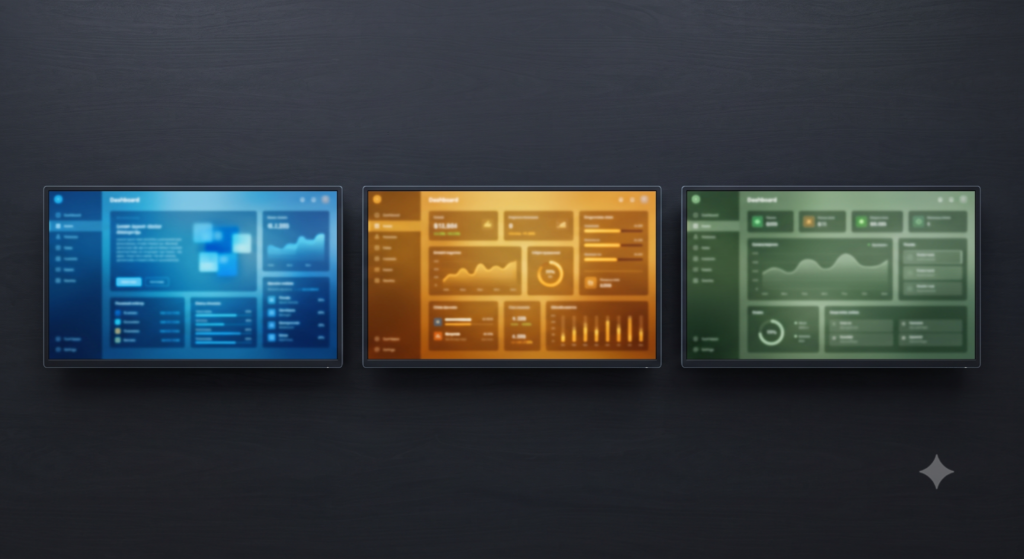
iKOSYSTEM gives broadcasters, content owners, and media networks a single secure login across the iKOMG services they already subscribe to, replacing multiple disconnected interfaces with one modular, tile-based dashboard covering playout, monitoring, OTT, FAST, EPG, and engagement tools.
The scope has a clear boundary worth stating plainly: iKOSYSTEM unifies the services a customer subscribes to within the iKOMG ecosystem specifically. It doesn’t extend into third-party tools running outside that stack. A broadcaster using other vendors alongside iKOMG services would continue managing those separately, unless and until those are also migrated onto the same stack.
Read to find out why the vendor-sprawl problem has become a structural inefficiency rather than a minor annoyance, and how operators are starting to address it at the architecture level rather than the dashboard level.
The mechanics break into three layers. Access centralizes first, with a single login replacing the separate URLs and credentials a multi-vendor setup typically requires. Visibility centralizes second: operators check cloud playout status, return-feed health with SLA alerting, OTT and FAST distribution, and EPG accuracy from the same real-time dashboard. Control centralizes third, through role-based access control and OAuth2/SAML authentication, backed by audit trails and API-ready integration.
How the Three Leading Platforms Compare
Amagi, Globecast, and iKOMG each represent a genuinely different route to the same destination, and the differences matter more than any single feature comparison.
| Dimension | Amagi | Globecast | iKOMG (iKOSYSTEM) |
|---|---|---|---|
| Model | Cloud-native SaaS | Managed services, outsourced operation | Managed portal, hybrid infrastructure |
| Owns satellite infrastructure | No, relies on third parties | Yes, large global footprint | Yes |
| Cloud playout | Core product | Available, not primary focus | Available |
| FAST channel automation | Strong, primary use case | Available | Available |
| Unified operations dashboard | Yes, self-service | Managed model, not self-service | Yes, single login across subscribed services |
| Platform cost structure | Software licensing | Bundled into managed service contract | No additional cost for existing subscribers, per iKOMG |
| Best fit | Cloud-first, FAST-heavy streaming operators | Large enterprises wanting full outsourcing | Hybrid satellite-plus-streaming operators |
Read across the table and the pattern is straightforward: Amagi wins on cloud-native depth and FAST automation but leaves satellite outside its scope entirely. Globecast wins on global managed-services scale but moves more cautiously into FAST and OTT monetization. iKOSYSTEM’s differentiator is combining owned satellite infrastructure with cloud, OTT, and FAST distribution in one login, at no added platform fee for existing customers, which makes it the more direct fit for operators who genuinely run hybrid distribution rather than one delivery format exclusively.
What to Verify Before You Commit
Coverage is the first thing to check: does the platform genuinely include playout, monitoring, EPG, OTT, and FAST, or are there gaps that push you back to a separate tool for part of the operation? Infrastructure ownership is the second: is the vendor actually operating the systems behind the dashboard, or aggregating other companies’ infrastructure behind a shared login, which changes who’s accountable when something fails? Cost structure is the third: is the unified layer bundled into services already being paid for, or does it show up as an additional line item?
For more on how vendors handle the operational side of this once a broadcaster is actually running the platform day to day, Is There a Unified Platform for Broadcasters? walks through the same three-model framework in audio form, with additional detail on where each model tends to break down under real operational pressure.
Bottom Line
A unified broadcast platform is not a single product category with one definition; it’s a label applied to three different operating models, and the right one depends entirely on whether a broadcaster is cloud-first, satellite-dependent, or running both simultaneously. iKOSYSTEM’s specific value is unifying the services a customer already subscribes to within the iKOMG stack, at no added platform cost, which makes it most relevant for hybrid operators rather than a universal replacement for every vendor evaluation. Amagi and Globecast remain credible answers for operators whose needs sit closer to one end of that spectrum. The evaluation criteria stay consistent regardless of which model fits: coverage, infrastructure ownership, and cost transparency.
FAQs
Q: Is there an actual unified platform for broadcasters, or is this mostly marketing language?
A: Genuine examples exist. iKOSYSTEM is one, consolidating playout, monitoring, OTT, FAST, and EPG under one login for subscribed services. The caution is that “unified” also gets applied loosely to platforms that consolidate the dashboard without consolidating who runs the infrastructure behind it.
Q: What’s the core difference between the three models described here?
A: An integrated platform unifies software while the broadcaster’s team still runs the infrastructure. DIY cloud assembly puts the broadcaster in the integrator role. A managed portal, like iKOSYSTEM, has the provider operating the infrastructure directly and handing over one dashboard for visibility and control.
Q: What services does iKOSYSTEM specifically bring together?
A: iKOBMS, iKOCLOUD, iKOPLUS, iKOGUIDE, iKOCLIPS, iKOFAST, iKOOTT, and iKOQ, spanning broadcast management, cloud playout, return-feed monitoring, EPG authoring, live clipping, FAST automation, OTT distribution, and engagement.
Q: Does iKOSYSTEM replace the need for Amagi- or Globecast-style services entirely?
A: Not necessarily. It’s a strong fit for hybrid satellite-plus-streaming operators specifically. Amagi remains a credible choice for cloud-first, FAST-heavy operations with no satellite requirement, and Globecast remains strong for large enterprises wanting a fully outsourced managed-services model.
Q: Does iKOSYSTEM cost extra on top of existing iKOMG services?
A: iKOMG states it’s included at no additional platform cost for customers already subscribed to its services. That’s a company-reported term, worth treating as such rather than as an independently audited guarantee.